Enargeia:
I hold it to my ear. I hold it in my hand
As I hear, Beloved, by the writer Toni Morrison is swept up in the large swaths of books, being banned in US school districts and libraries, I wish to return to the late author’s Nobel address lecture in 1993 where she brings forth the bird-in-the hand – as an image to speculate with or about. ‘Speculation on what (other than its frail body) that bird-in-the hand might signify has always been attractive to me’, Morrison states.
The performance lecture, Enargeia: ‘I hold it to my ear. I hold it in my hand’ enters the act of speculation and fabulation with birds and other animals – living and dead – presenting material from the exhibition, Enargeia and the recent installation, The Other Night, The Wolf’s Night, with further performative asides.
The ‘live’ of language becomes a site where the question posed lifts speaker, listener and witness to enter various environments and assemblages – text, object, sculpture and sound. Here inner speech or the ‘objects of thought’ are recovered and transfigured in the present moment.
Together with the participants in the performance, we take the question relayed by the children in Morrison’s lecture – ‘Old Woman, I hold in my hand a bird. Tell me whether it is living or dead.’
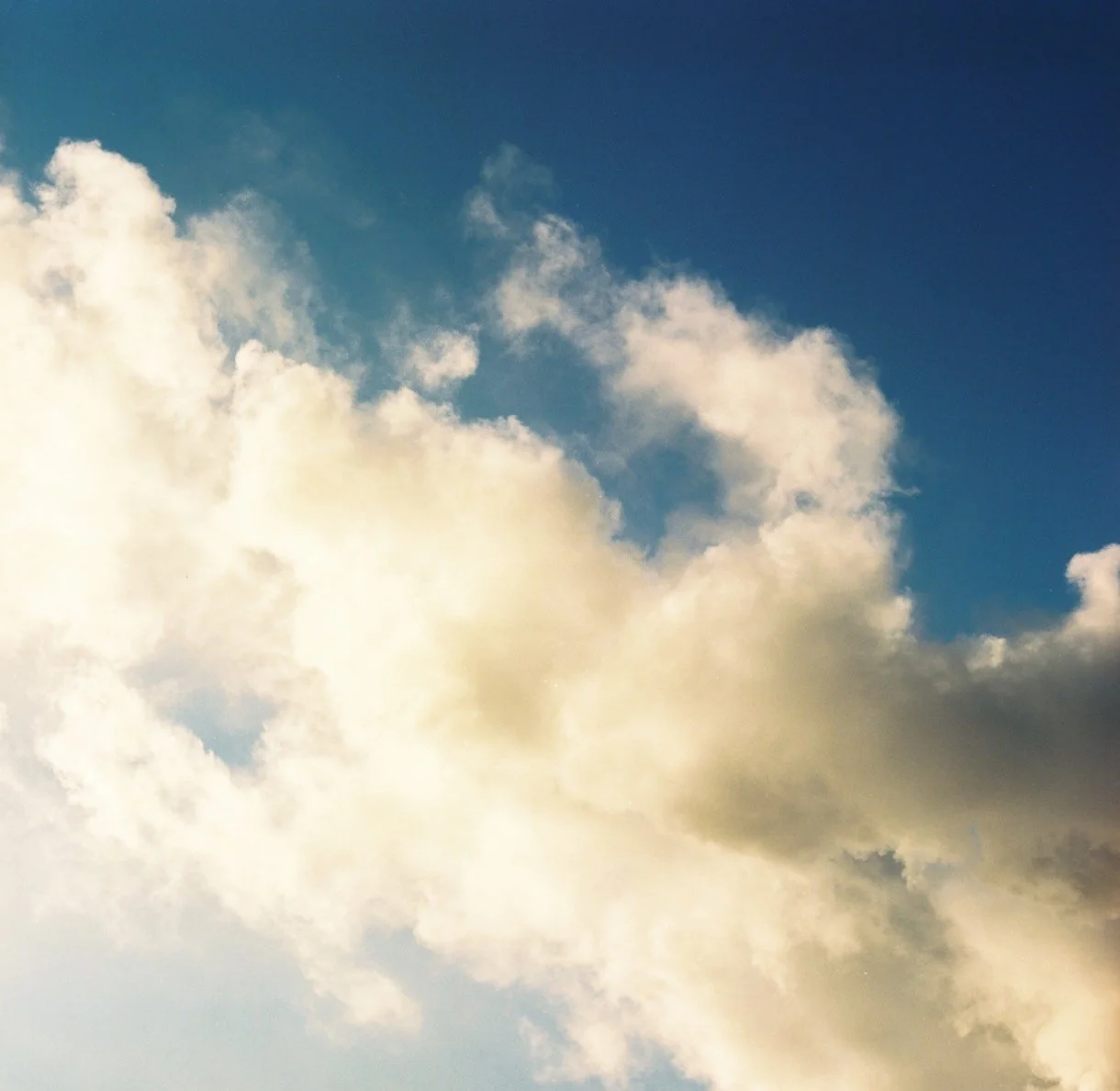
Paper Clouds Pass a Mute Swan, Pelle, 2016, Piteå, Sweden, C-type handprint
Coyote Daydream
It is early morning, I am in Los Angeles, in Griffin Park walking before the searing heat pushes you back inside, to the coolness of a dark interior. It is another ‘unprecedented heat wave’ and the sky is blue, with a light that bleaches the surroundings. An idea looms in my mind and in a childish manner of wishing, I ask my company if you can see wild coyotes in Griffin Park. Apparently, I am told they are present, but it is rare to actually encounter one. Separated from the group and still lost in an early morning state with my newly acquired 35 mm film SLR camera around my neck (it is the first camera I own), I daydream about Beuy's coyote... did he stumble upon it, in the wild, or was it taken from captivity. In the middle of New York - Joseph Beuys and the coyote. But a coyote is a desert animal, an animal, tied to the mythologies of the Native American peoples. I belong to that heritage, my father told me so, and I am coming to America to see him for the first time. Can I, through the paternal line encounter a coyote? What picture would I take? And more importantly what happened to Joseph Beuy’s coyote - no one ever says.
'Coyote', I hear in loud whispered tones as if to wake me from a dream. 'Coyote'. I turn and in front of me - not merely a meter away from me - I see a large, male coyote. We gaze into each other's eyes, neither of us moving, and I don't remember much apart from its eyes and its breathing body. A perfect image - the thought intrudes - but we are both so still. To take the image, something would happen - a captivity. I rest with the idea of an after image. Thoughts leave the body and we stare at each other, as if struck in a trance. I blink, the coyote moves away slowly, followed by other coyotes, a mate and some young. In unison we move and depart, but I turn and again we stand still, and look at each other - then silently and slowly we part.
The others who called out, ‘coyote’ witnessed the scene, describing it as extraordinary and perhaps for 15 minutes or so they say the male coyote slowly receded into the background. When the coyote appears again for a last time as a mirage, a faint mark, far in the distance, I ask someone else to take a photograph, as evidence.
This moment has a profound effect on me. I think upon the mythic tale of Orpheus and Eurydice. I return to Griffin Park, but never see a coyote. And then finally, seven years later, driving down a desert road, I see a coyote, in its habitat, a figure in the landscape.
I have to wait - it is a passing figure, there is no gaze in this image, a shadow obscures its face.
Song for the Slain Birds and Children
On October 5th, 2023, over a thousand birds died when they flew into the windows of a building in Chicago. In little over two days, the fate of thousands of children would painfully change. “The sight of defenseless children in distress should evoke global outrage and galvanize us to act,” wrote the former UK Prime Minister Gordon Brown at the end of October 2023 when over 2,000 children had died – but it has not. Children are not protected in conflict. In the last 12 months 33,000 children have died globally in armed conflict.
Palm Warbler 303
Yellow-rumped Warbler 212
Tennessee Warbler 90
Magnolia Warbler 72
Common Yellowthroat 45
Northern Waterthrush 43
Gray Catbird 9
Ovenbird 37
Swamp Sparrow 20
White-throated Sparrow 20
American Redstart 12
Lincoln’s Sparrow 10
Sora 9
Black and White Warbler 8
Bay-breasted Warbler 8
Cape May Warbler 7
Swainson’s Thrush 6
This sound work is a polyphonic song between two children and the documented thousand songbirds who died last October - a ghost flock to honor the voices of those who have died and to lament both bird and child.
Sound Sculpture,1000 bird song and calls and 2 children’s voices.
(The following list does not represent all collision victims)
Gray-cheeked Thrush 4
Nashville Warbler 4
Savannah Sparrow 4
Rose-breasted Grosbeak 4
Indigo Bunting 4
Wood Thrush 3
Blackpoll Warbler 3
Willow/Alder Flycatcher 2
Hermit Thrush 2
Orange-crowned Warbler 2
Black-throated Blue Warbler 2
Blackburnian Warbler 2
Connecticut Warbler 2
White-crowned Sparrow 2
Black-throated Green Warbler 1
Fox Sparrow 1
Dark-eyed Junco 1
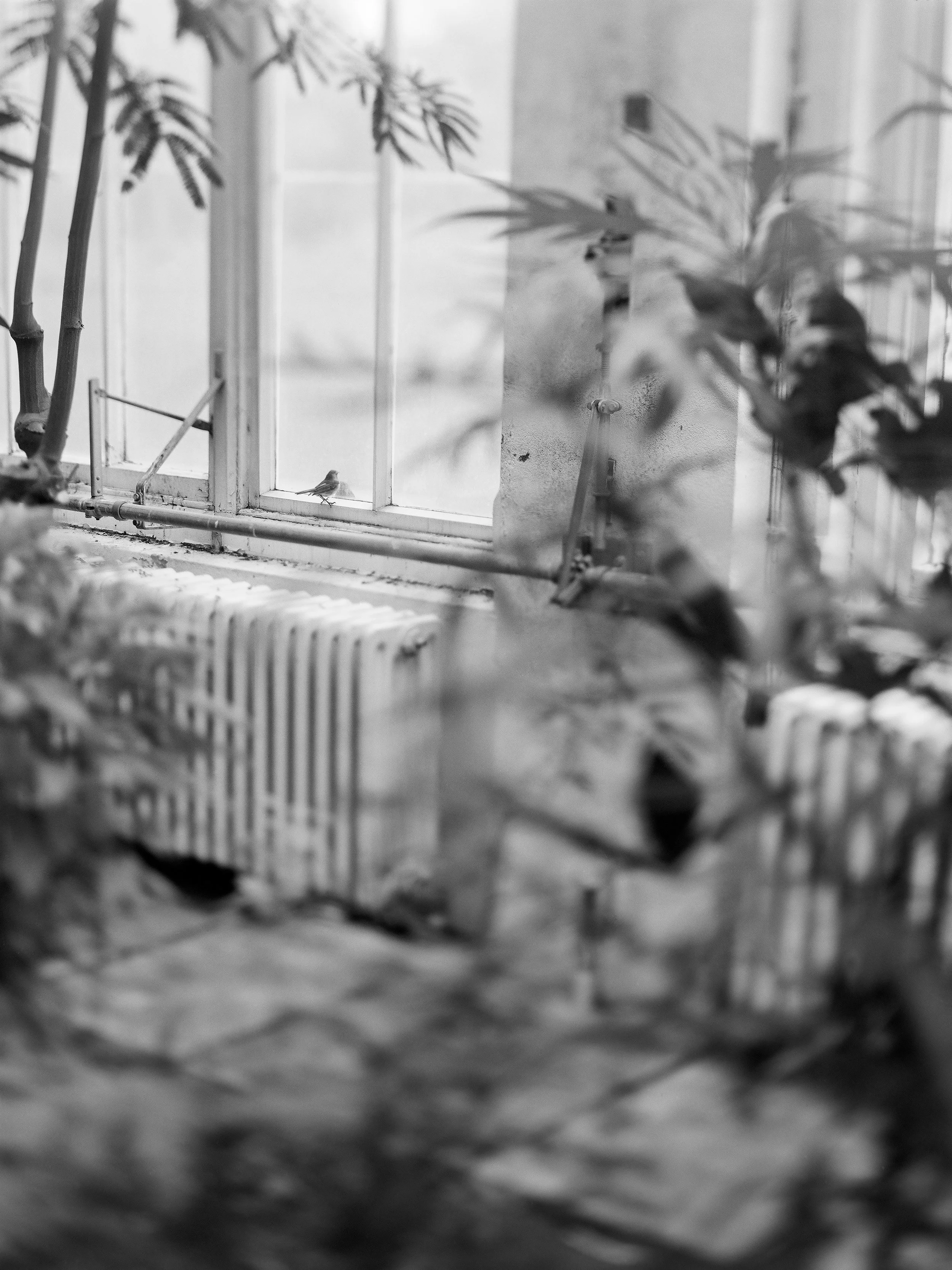
Mirror Bird for the Slain Children, 2024, Kew Gardens Glasshouse, London, UK, black & white photograph
Melt
A number of animals enter into this forest walk, with each image and word-thought stained with plant sap, filling the spaces and gaps of the Northern Swedish winter and landscape. The birches, conifers and trees that are not yet familiar hold a stately position in deep snow, the horizon's line alters daily depending on the thaw or snowfall. This line, this place by which you orient yourself, is constantly changing — there is always movement, there are always shifts, and there is a parallel to the glass plates of field cameras, a latitude that alters the lift or fall of the ground glass by the change in weather states. The animals — deer who have crept North during warmer years and who may die of dehydration, the foxes, birds, mice and squirrels — all are glimpsed in the periphery of vision, sometimes in one walk, leaving the tracings of their footprints in the crust of the snow. Their bodies echo thoughts, of having seen, possibly seeing, maybe being seen in this landscape that carves out the image world of the child; of picking up sticks that lie in wait upon the surface of the snow to strike away the abstract shapes and forces that impede a peaceful sight.
In the urban city of London the large sodden leaves replace the rime-filled patterns of snow that make trees appear as winged creatures or majestic bird figures and glaze everything that cannot move, as the landscape is petrified in a delicate trembling — the thought is to shake the trees, to bring back the warmth, to undo this perpetual cold that holds a monochromatic scale of such an intensity that only one note is sounding, if you hear anything at all, within the landscape. All is muted and quiet, so you must shout, to clarify that a sound can be made, or needs to be made, to acknowledge life to this voice in these surroundings.
In this space, between light and dark, the landscape holds a perspective that rhymes between the dark type of words on the page and the white spaces around, the letters and the grammatical form hold language together, they assist in the forest around you being heard. An equal weight is given to the spaces around the words and the words themselves; this opens the landscape of reading to a depth, the opening of space, to voices, to the reading of words. This can be transposed to images, to the perspectival space between what is foregrounded and what is not, but in the winter landscape they hold an equal place, an oneiric depth, which, in this very grasping, diminishes and dissolves what is in front and behind. The animal procession of glimpsed figures moves forward and appears to write over the very words that the mind attempts to inhabit, so there is only this plant-sap surface to relate to. They, the animals and birds, are of this world of changing horizons, of faded light, and now of winter-spring, and over there in the cities, in the wet and in the dark, moving just outside our view, back towards imagined sightings.
To grasp the space brightly, to bring forward this peripheral space requires the call or song of birds. When a bird sings, whether it is familiar or not, it brings us closer to voice, to the voice of others that share this landscape. We can listen to the voices or we can let them fall.
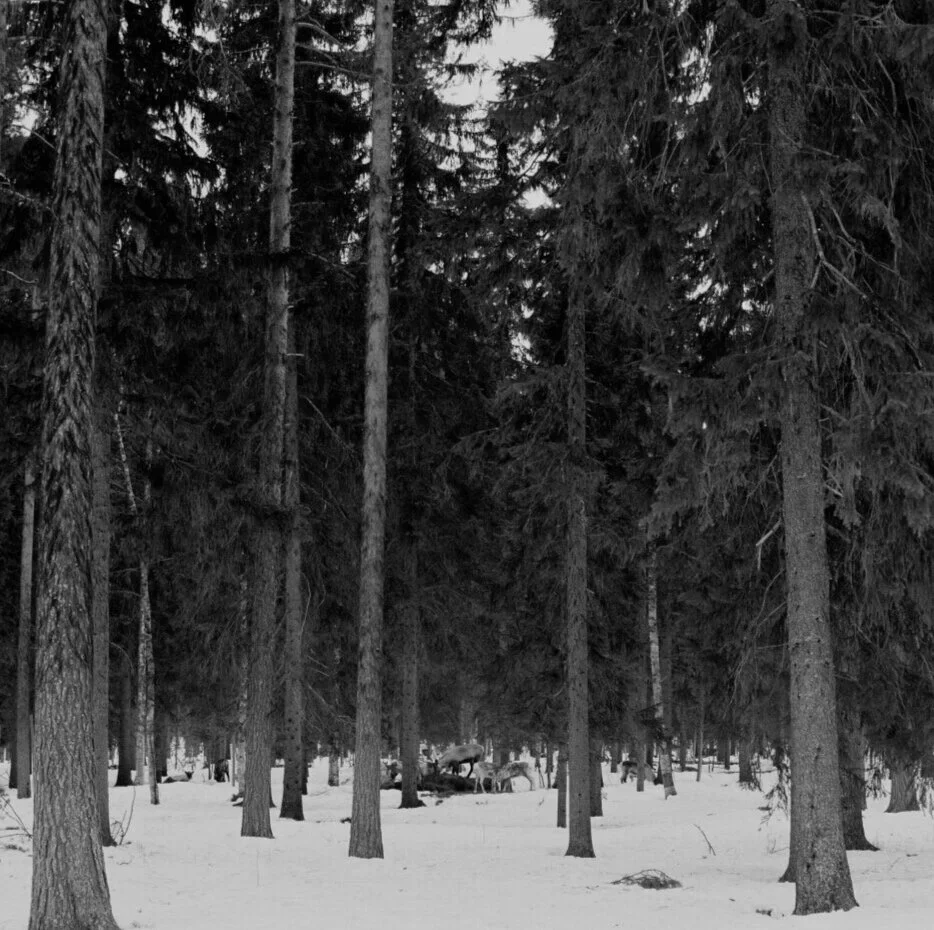
Melt
A number of animals enter into this forest walk, with each image and word-thought stained with plant sap, filling the spaces and gaps of the Northern Swedish winter and landscape. The birches, conifers and trees that are not yet familiar hold a stately position in deep snow, the horizon's line alters daily depending on the thaw or snowfall. This line, this place by which you orient yourself, is constantly changing — there is always movement, there are always shifts, and there is a parallel to the glass plates of field cameras, a latitude that alters the lift or fall of the ground glass by the change in weather states. The animals — deer who have crept North during warmer years and who may die of dehydration, the foxes, birds, mice and squirrels — all are glimpsed in the periphery of vision, sometimes in one walk, leaving the tracings of their footprints in the crust of the snow. Their bodies echo thoughts, of having seen, possibly seeing, maybe being seen in this landscape that carves out the image world of the child; of picking up sticks that lie in wait upon the surface of the snow to strike away the abstract shapes and forces that impede a peaceful sight.
In the urban city of London the large sodden leaves replace the rime-filled patterns of snow that make trees appear as winged creatures or majestic bird figures and glaze everything that cannot move, as the landscape is petrified in a delicate trembling — the thought is to shake the trees, to bring back the warmth, to undo this perpetual cold that holds a monochromatic scale of such an intensity that only one note is sounding, if you hear anything at all, within the landscape. All is muted and quiet, so you must shout, to clarify that a sound can be made, or needs to be made, to acknowledge life to this voice in these surroundings.
In this space, between light and dark, the landscape holds a perspective that rhymes between the dark type of words on the page and the white spaces around, the letters and the grammatical form hold language together, they assist in the forest around you being heard. An equal weight is given to the spaces around the words and the words themselves; this opens the landscape of reading to a depth, the opening of space, to voices, to the reading of words. This can be transposed to images, to the perspectival space between what is foregrounded and what is not, but in the winter landscape they hold an equal place, an oneiric depth, which, in this very grasping, diminishes and dissolves what is in front and behind. The animal procession of glimpsed figures moves forward and appears to write over the very words that the mind attempts to inhabit, so there is only this plant-sap surface to relate to. They, the animals and birds, are of this world of changing horizons, of faded light, and now of winter-spring, and over there in the cities, in the wet and in the dark, moving just outside our view, back towards imagined sightings.
To grasp the space brightly, to bring forward this peripheral space requires the call or song of birds. When a bird sings, whether it is familiar or not, it brings us closer to voice, to the voice of others that share this landscape. We can listen to the voices or we can let them fall.
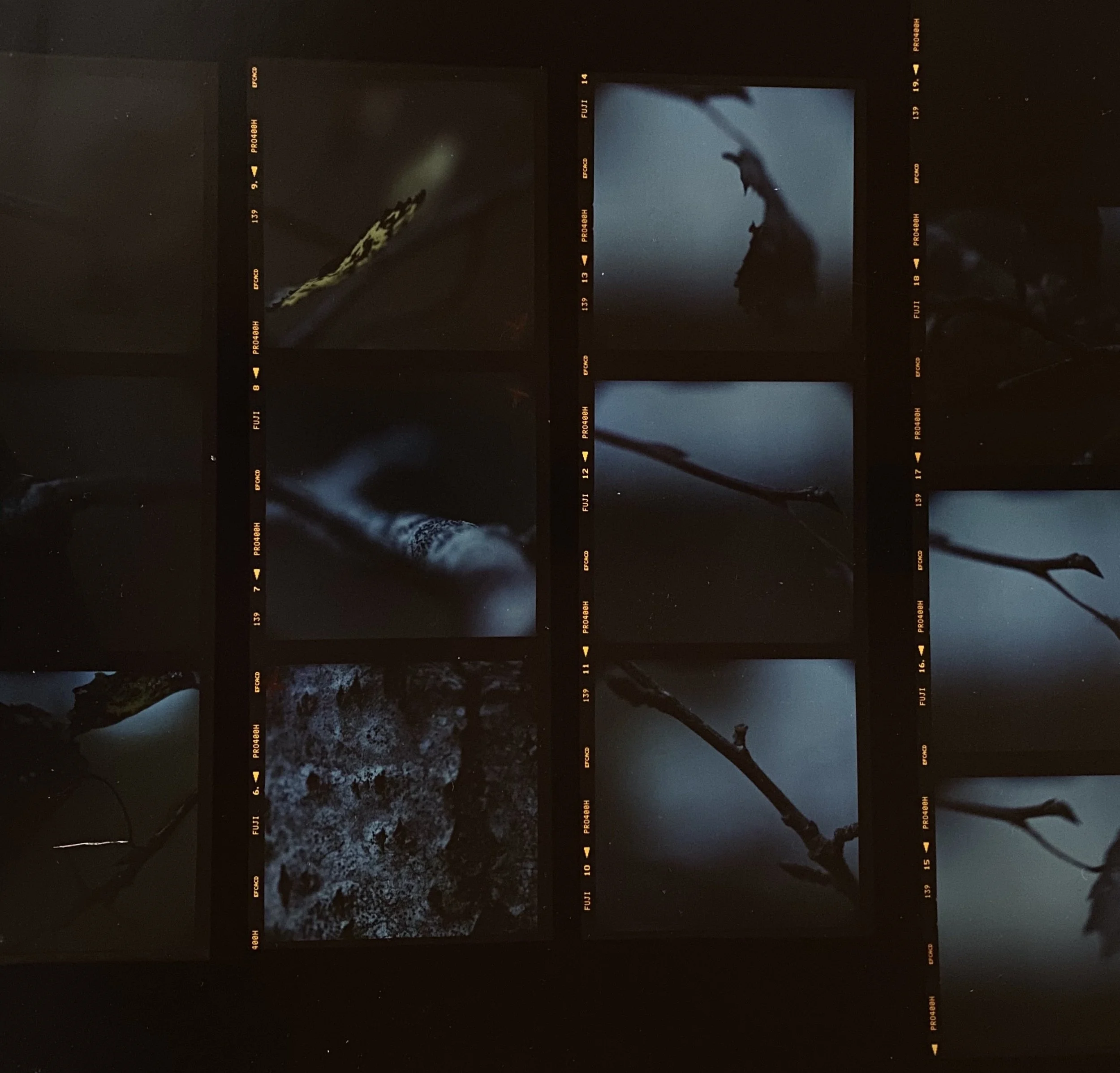
Ash Figures
Unique bronze cast of 7 wild birds, nest, wolf and brown hare - 2014-2016
Ash Figures reflects on the presence of photographs and how we turn to the image, to make sense of our encounter with the everyday, a presence which does not begin when we decide it should, or end when we command it to, as it develops with us and in response to us.
The auric and nebulous moment of the live performance becomes akin to the development of a self-developing image on sensitized paper, where after a certain time, the landscape or figures gradually develop themselves on the surface of the paper or plate. As the images fade, these faded images are 'revived' by re-exposing them to the chemical environment in which they were developed and when they reappear contain new details.
Ash Figures is a collaboration and performance with Double Bassist, Josefin Landmer from Norrlandsoperan. The work is realised with the artist Tryggve Lundberg.
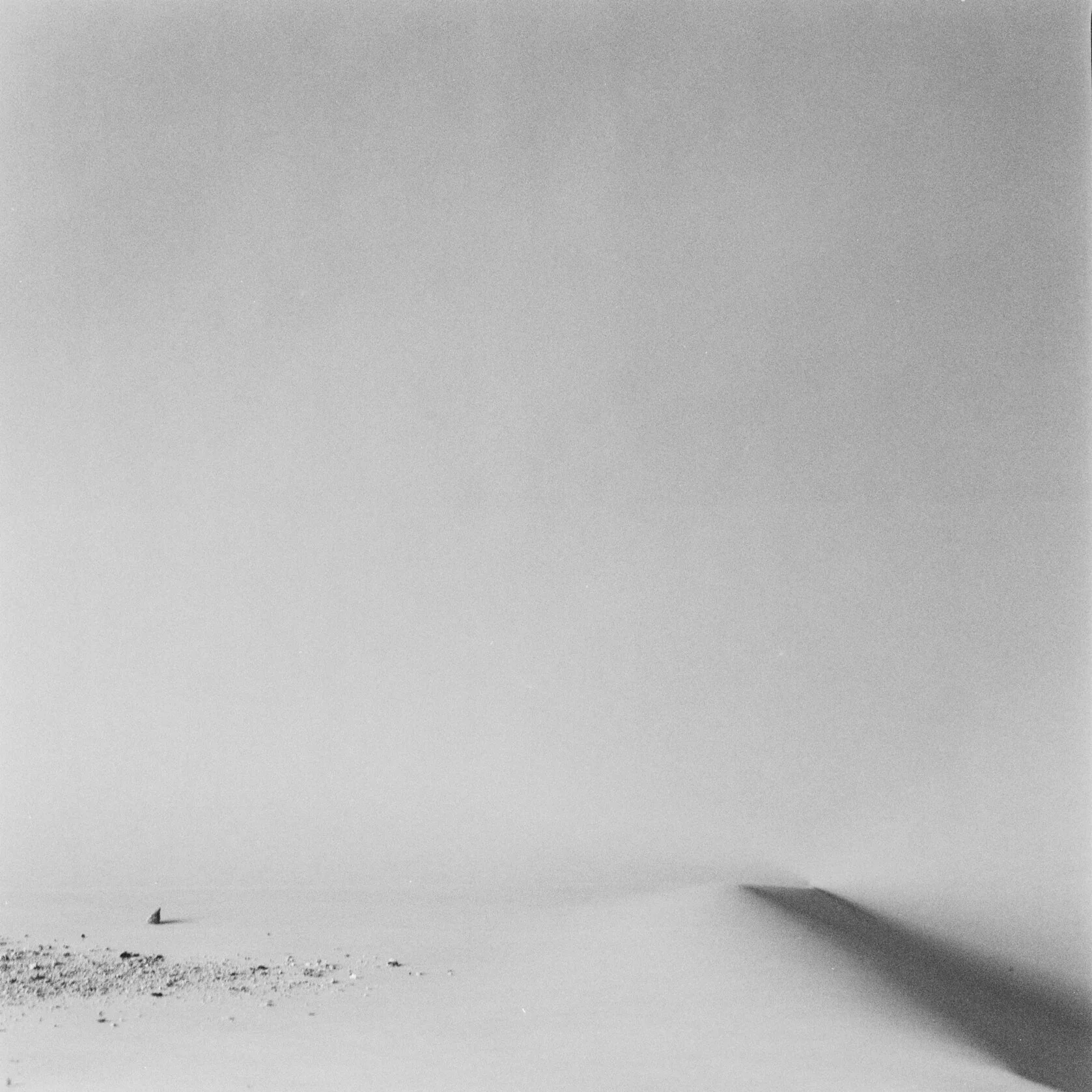
From the triptych, 'Inscription on Paper', C Type Print
The Internal Conversation
Wednesday Afternoon has always been happiness and melancholia. Split between looking and recovering, forward and back, a splicing of time. Towards the weekend and away from the start of the week. A reminder of a monotony, I had forgotten when repetitively pressing word processor keys, and wistful configurations of dramas to enliven something, but feeling part of the crime, that is boredom. Stretching Wednesday afternoon.
Who am I to say....? the breaks and pauses, halter, sting, sit, tustle, rise, tumble. I am left watching images dissolve.
Distractions.
Who am I to say, but something caught my eye. Or shall I suggest being drawn to a place, a situation that you can never quite come at, somewhere beyond the borders of mind? I am reminded of Edward Thomas’s The Unknown Bird.
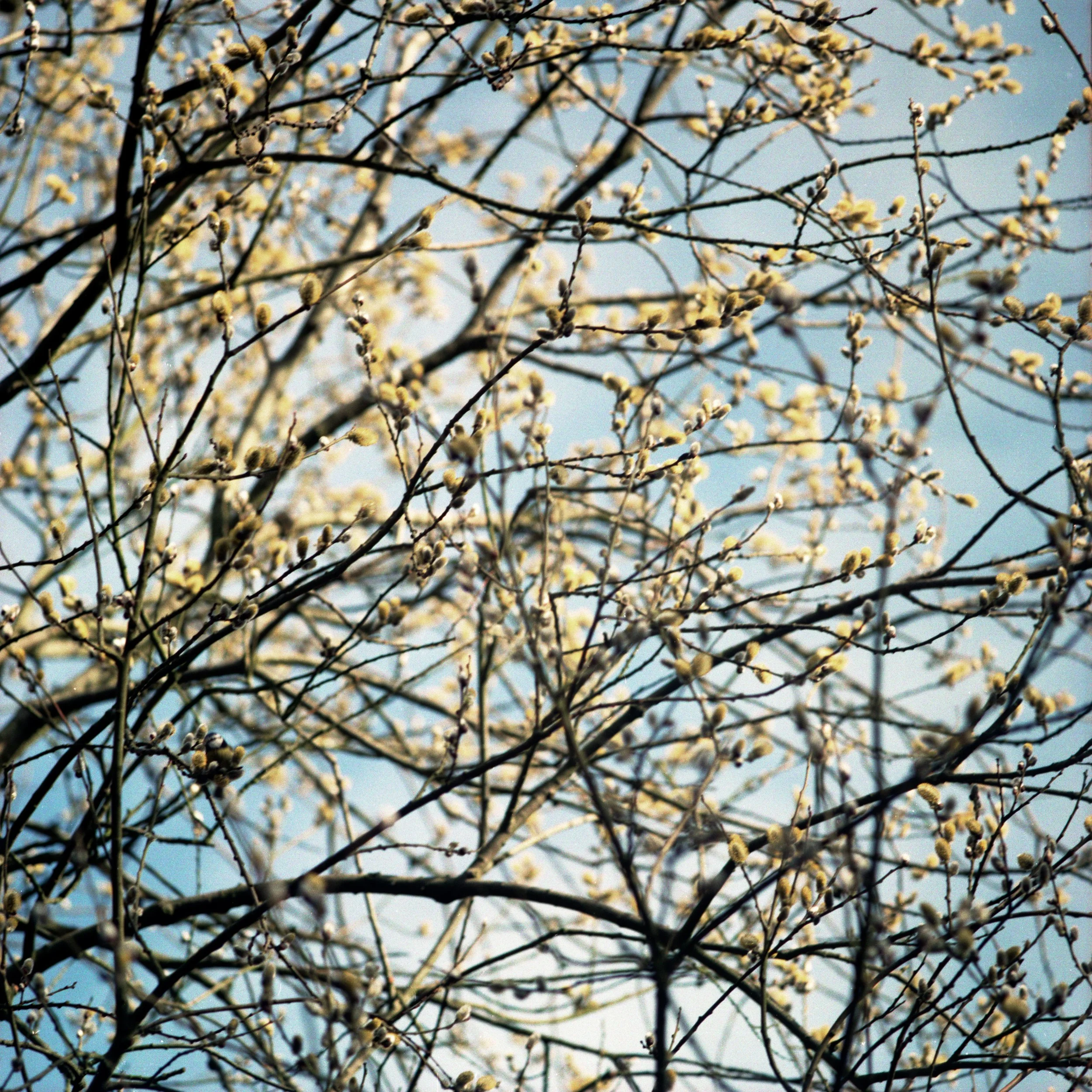
Conference of the birds, C Type Print